RicePK Journal
Will Rice Prices Fall Further in Pakistan? New Crop, Iran Border Disruption and Market Outlook
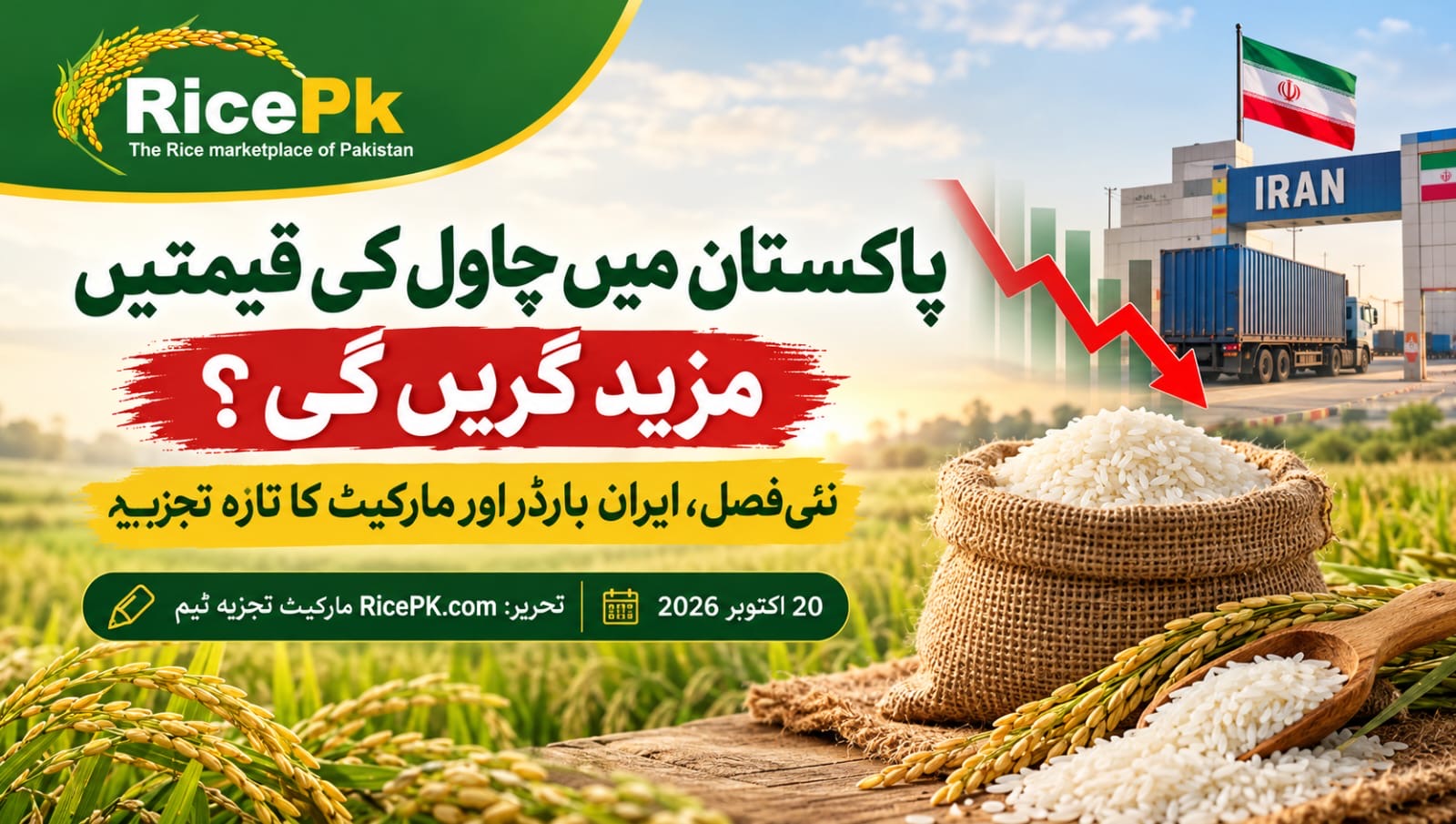
Will Rice Prices Fall Further in Pakistan? New Crop, Iran Border Disruption and Market Outlook
By: RicePK.com Market Analysis Team | October 20, 2026
Pakistan’s rice market is facing pressure as the new crop begins arriving while stocks from the previous season remain available. Slow buying, payment concerns and disruption to land trade with Iran have added uncertainty for traders. ????
New Crop Supply and Price Pressure More rice supplies are expected to enter the market over the coming weeks. If arrivals increase while buyers remain cautious, sellers may face greater pressure to offer competitive prices. According to a Government of Pakistan report, the provisional estimate for rice production in 2025–26 was approximately 10.18 million tonnes. Traders should therefore monitor new-crop arrivals alongside existing stocks and export demand. ????
Iran Trade Disruption and Rising Transport Costs Iran is an important market for Pakistani rice. A report published on October 19, 2026, stated that land trade between Pakistan and Iran had been temporarily suspended for security reasons. According to market information shared with RicePK.com, transportation costs on certain routes that were previously estimated at around Rs. 22–25 per kilogram may now exceed Rs. 50 per kilogram when alternative routes and additional expenses are involved. These figures are market estimates, not independently verified official transport rates. Higher logistics costs can reduce exporters’ profit margins, make shipments less competitive and discourage buyers from placing new orders. ????
Could Prices Decline Further? Further price pressure is possible if:
- New-crop arrivals continue to increase.
- Previous-season stocks remain unsold.
- Domestic and export buyers purchase cautiously.
- Trade disruptions and high transport costs continue.
However, prices could receive support if cross-border trade resumes or export demand improves. A further decline is therefore possible, but not guaranteed. ????
What Should Rice Buyers Do?
- Purchase according to actual business requirements.
- Consider staged purchasing instead of buying the entire quantity at once.
- Compare quality and specifications, not just prices.
- Calculate storage, financing and handling costs before holding stock.
- Confirm payment and delivery terms before committing to export transactions.
Lower prices may create buying opportunities, but holding inventory also carries risks. Buyers should consider their available capital, storage capacity and ability to withstand further price changes.
Conclusion:
Pakistan’s rice market will depend on new-crop supply, carry-over stocks, export demand, developments in Iran trade and transportation costs. In an uncertain market, informed decisions and disciplined purchasing are more valuable than relying on price predictions alone. For rice market updates and price information, visit RicePK.com.
Disclaimer: This article provides general market analysis and does not guarantee future prices or constitute financial advice.
Buy, sell, or check today’s rates
RicePK connects millers, traders, and buyers across Pakistan.